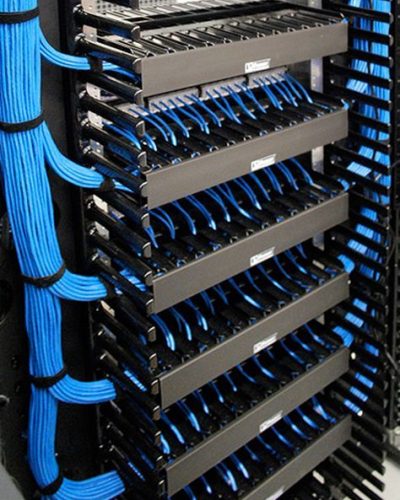
ISP stands for Inside Plant, and OSP stands for Outside Plant.
OSP
- Home
- OSP
How can you broaden the reach of your workplace networks and cabling systems? You may expand your networks to the outside and reach across a huge campus by employing outside plant (OSP) cable to run equipment underground or overhead. So what exactly is this OSP? Let’s know a bit more about this.
What is OSP?
OSP stands for Outside Plant. OSP refers to all equipment, cables, and infrastructure placed outside a telecommunications industry’s building. The Outside Plant Division’s objective is to supply communication services to telecom operators, DTH providers, oil and gas companies, power and water utilities, and so on. The division specializes in full-service fiber optic cable installation projects. The OSP fiber networks serve as the foundation for the internet. OSP cable with outdoor ratings outperforms standard indoor-rated copper or fiber cable in terms of performance in adverse circumstances. It is resistant to abrasion and ripping and is meant to endure floods, dampness, and extreme hot and low temperatures.
Features & Benefits
Protection
- The rugged cable design guards against harsh outdoor conditions.
- Wide variety of up-jacket sizes for all applications
- Loose tubes are available in gel-filled or gel-free designs for complete water-blocking.
- Design is entirely dielectric (except armored cable)
- Pulling-eye provided for simplicity of installation and enhanced security.
Investment
- Outside Plant, fiber Assemblies provide a tough option for placing fiber in any OSP optical network.
- They are environmentally robust, have low insertion loss, and have less back reflection.
- All assemblies have been thoroughly tested.
Integrity
- Cables and connectors are developed, tested, and certified.
- Ribbon fiber, loose-tube, and ADSS cable configurations are offered (All-Dielectric Self-Supporting)
- Supports single mode and multimode fibers that are industry standard.
Fiber optic cables for outdoor plants are built to endure installation operations and the stress of being exposed to the elements. Outside plant fiber optic cables work exceedingly well in rainy and high-temperature situations. They have the versatility to satisfy the demands of campus backbones since they may be deployed in ducts, direct buried, and aerial/lashed.
Why Us?
Cancomm’s workforce is well-versed in safety and capable of handling all important areas of fiber installation. We remain competitive in the fiber optic business by always improving our skills and remaining up to date on all fiber optic advancements. Cancomm is your first point of contact for high-quality, dependable fiber optic services.
Cancomm OSP fiber Assemblies are built to last in even the harshest situations. Our approach and design handle failure-prone areas such as transition and termination. In the fiber transition, we utilize a unique method that not only preserves the fiber but also assures that no lateral movement happens due to temperature fluctuations. Contact us today to discuss your fiber optic or structured cable system project!
FAQ’S
Frequently Asked Question
All of our services are backed by our 100% satisfaction guarantee Our electricians.
-
What are ISP and OSP?
-
What is the main difference between ISP and OSP?
Inside-building cable is referred to as ISP. It includes everything from the patch panel, patch cord, and switch to cables and connectors. OSP refers to any network infrastructure that is put outside of buildings. Each may need a different type of cable and a different installation process.
-
Who is an outside plant engineer?
The OSP Telecom Engineer is in charge of creating thorough engineering designs, prices, and project dates. They must ensure that the infrastructure is correctly established, and it's their job to get the requisite fiber cable storage, termination, and access equipment.